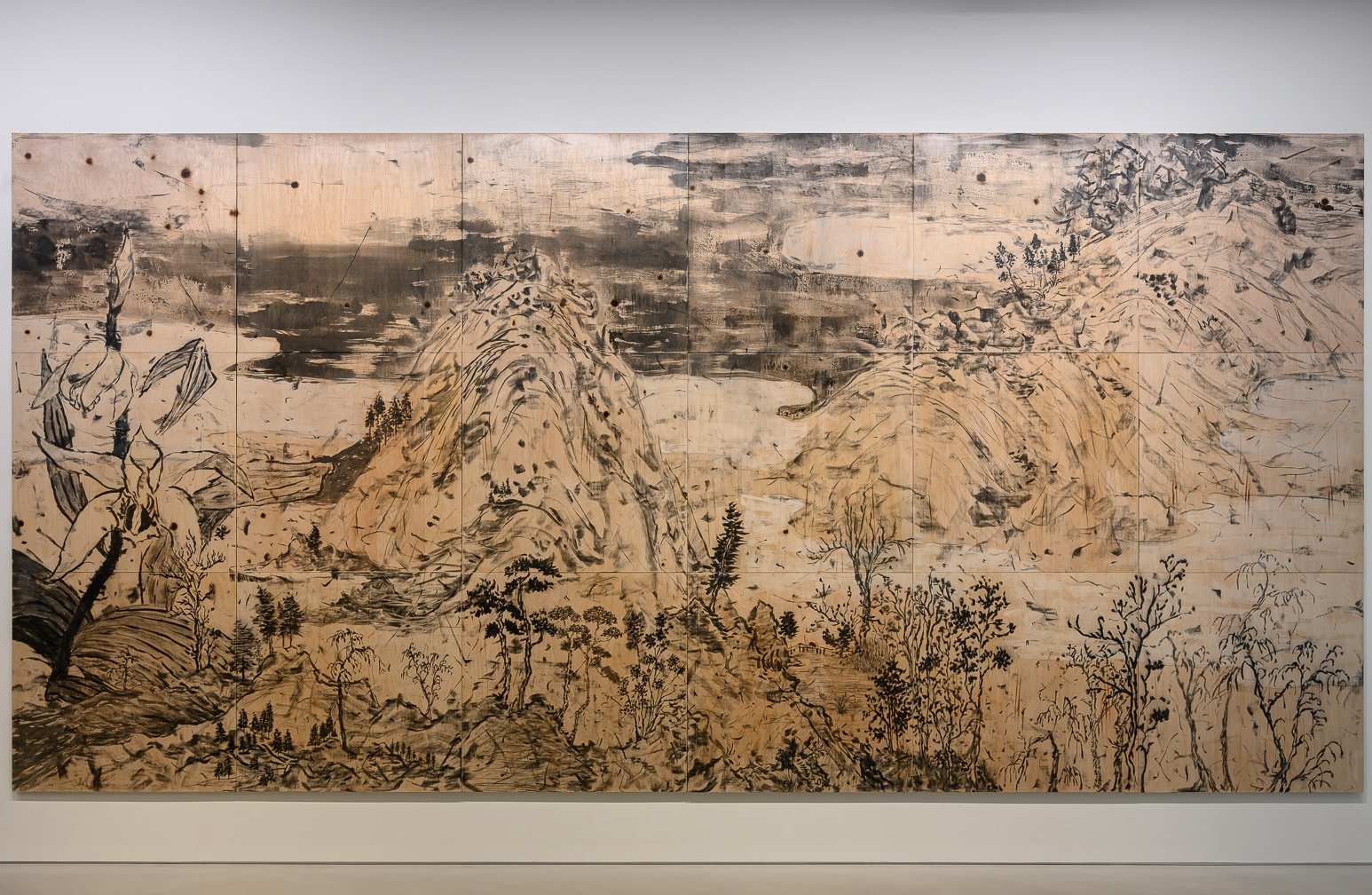
Dwelling in Fuchun Mountains (Rebuild)《富春山居圖再造》
Charcoal and ink on plywood | H 358 x 734.5 cm in 18 panels | 2025 | Photo by Anpis Wang
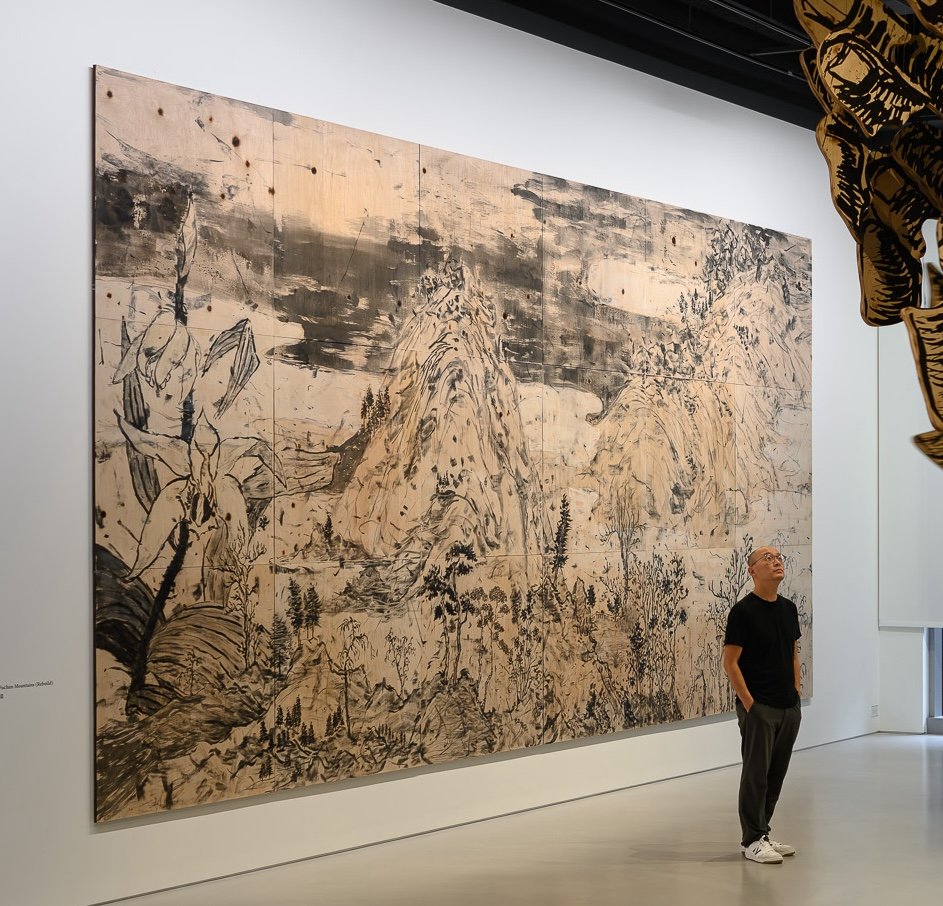
Dwelling in Fuchun Mountains (Rebuild)《富春山居圖再造》(2025). Installation view: Everyone’s journey toward faith is different (October 23, 2025 - January 17, 2026), gdm Taipei. Photo by Anpis Wang
Huang Gongwang (1269-1354)’s Dwelling in Fuchun Mountains (1348-50) is one of the most famous paintings in Chinese history, depicting magnificent ‘mountain and water’ (shanshui) across four seasons. Created during Yuan dynasty's decline, a time marked by upheaval and the end of Mongol dominance. The masterpiece was tragically split into two pieces after Huang’s death—one half now resides in the Zhejiang Provincial Museum, and the other in Taipei’s National Palace Museum. This forced dislocation echoes Lam’s personal experience—sense of non-belonging, and internal division between cultures and homelands.

Lam Tung Pang in the studio with Dwelling in Fuchun Mountains (Rebuild)《富春山居圖再造》(2025) | Photo courtesy of Ying Wang
In Lam’s rendition, he deconstructed elements from the separated masterpiece and reproduced them into a new allegorical landscape featuring two mountains situated across a river, like two islands. The reproduction gradually diverged from the original as the artist incorporated trees and plants, revealing layered perspectives between past and present, hope and disillusion.
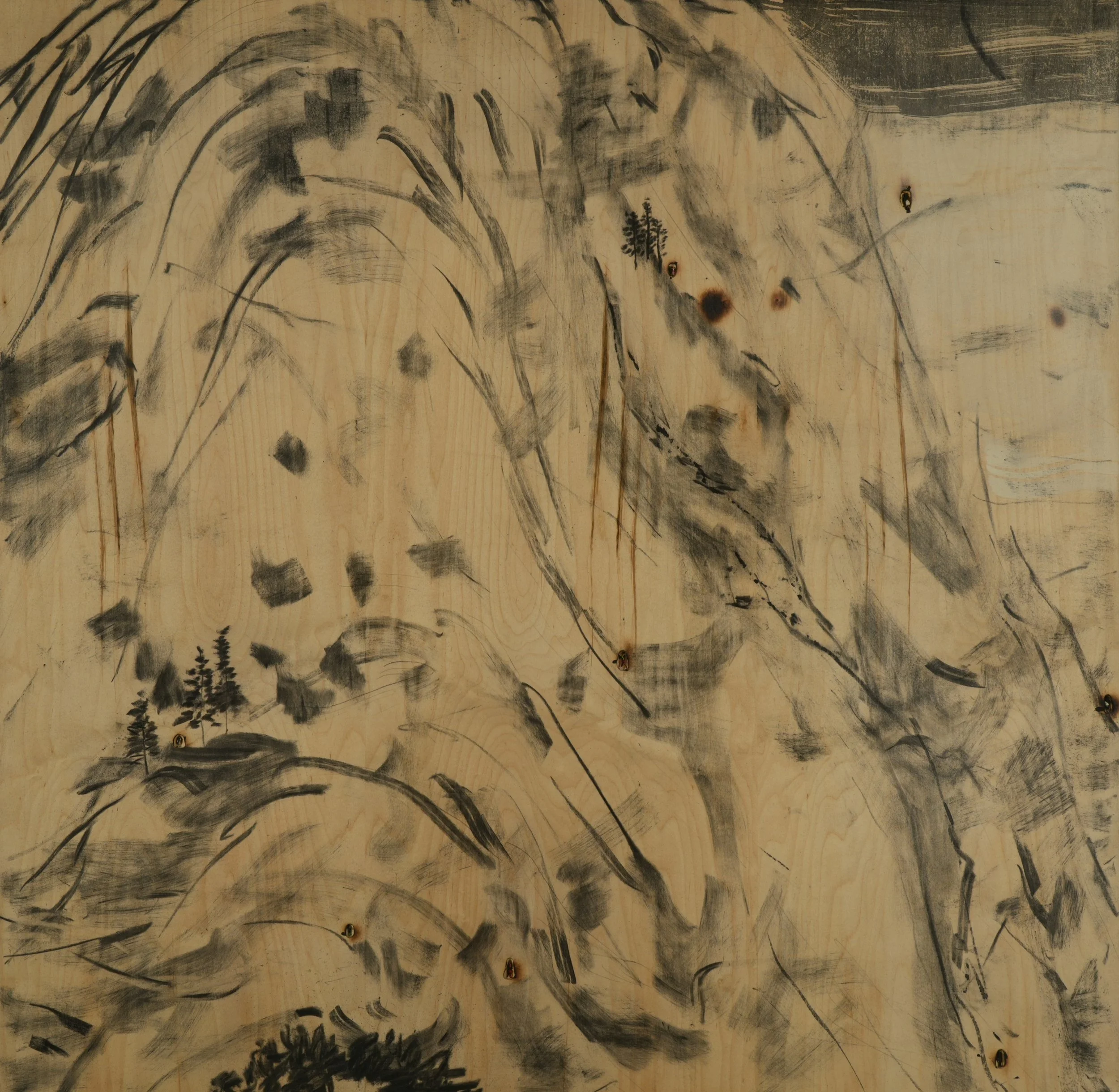
Detail: Dwelling in Fuchun Mountains (Rebuild)《富春山居圖再造》(2025) | Charcoal and ink on plywood | H 358cm x 734.5cm in 18 panels
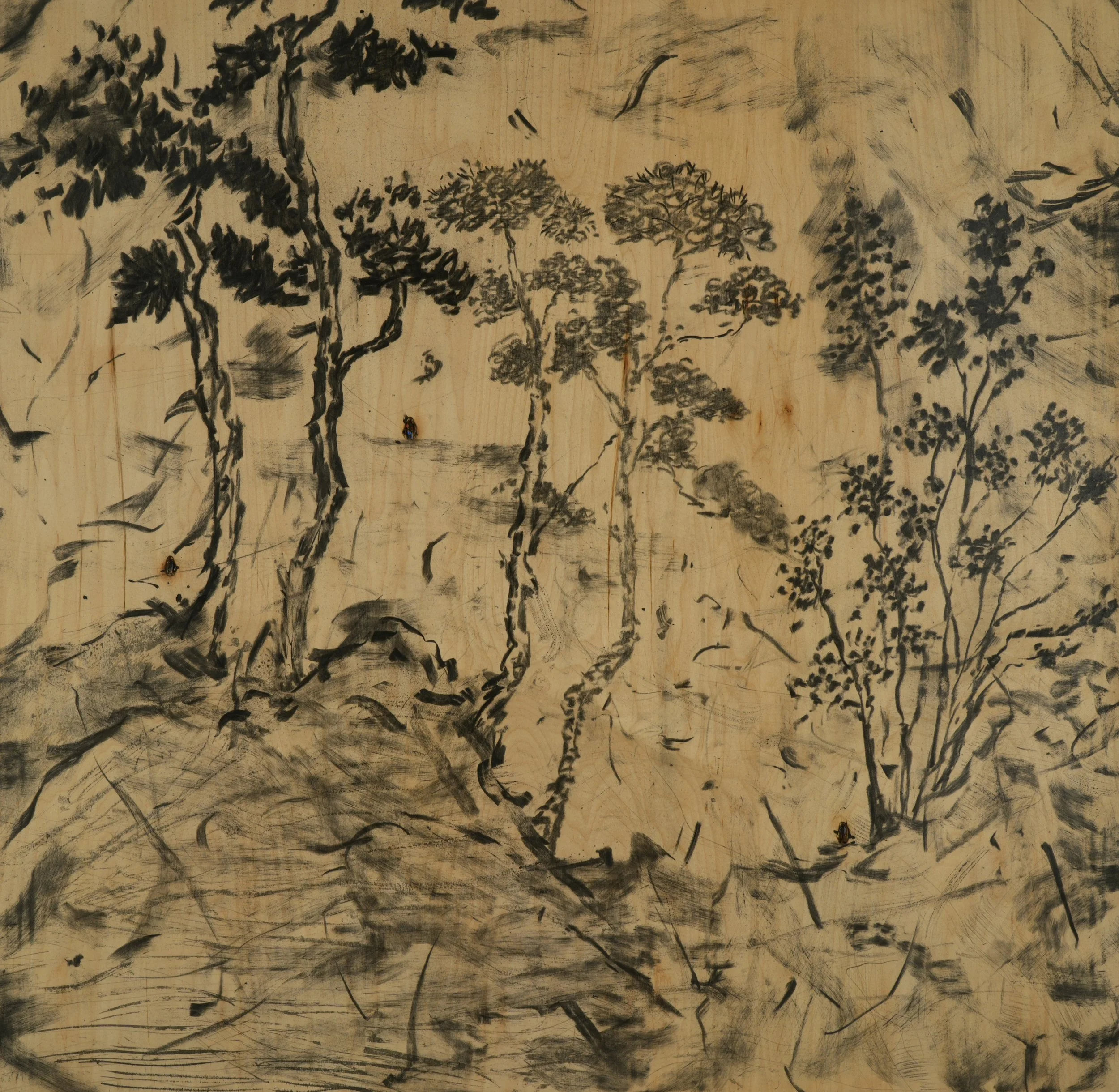
Detail: Dwelling in Fuchun Mountains (Rebuild)《富春山居圖再造》(2025) | Charcoal and ink on plywood | H 358cm x 734.5cm in 18 panels
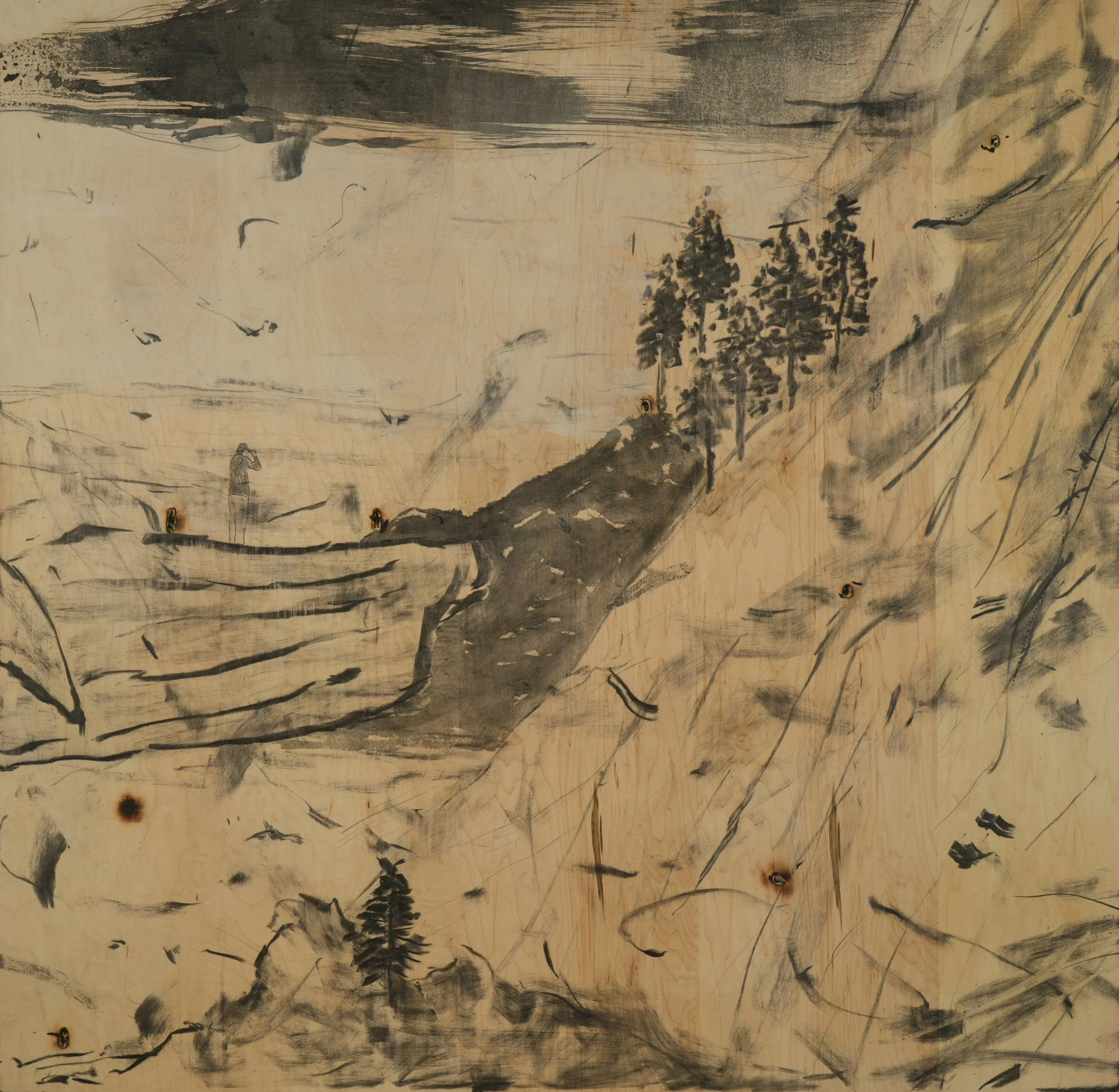
Detail: Dwelling in Fuchun Mountains (Rebuild)《富春山居圖再造》(2025) | Charcoal and ink on plywood | H 358cm x 734.5cm in 18 panels
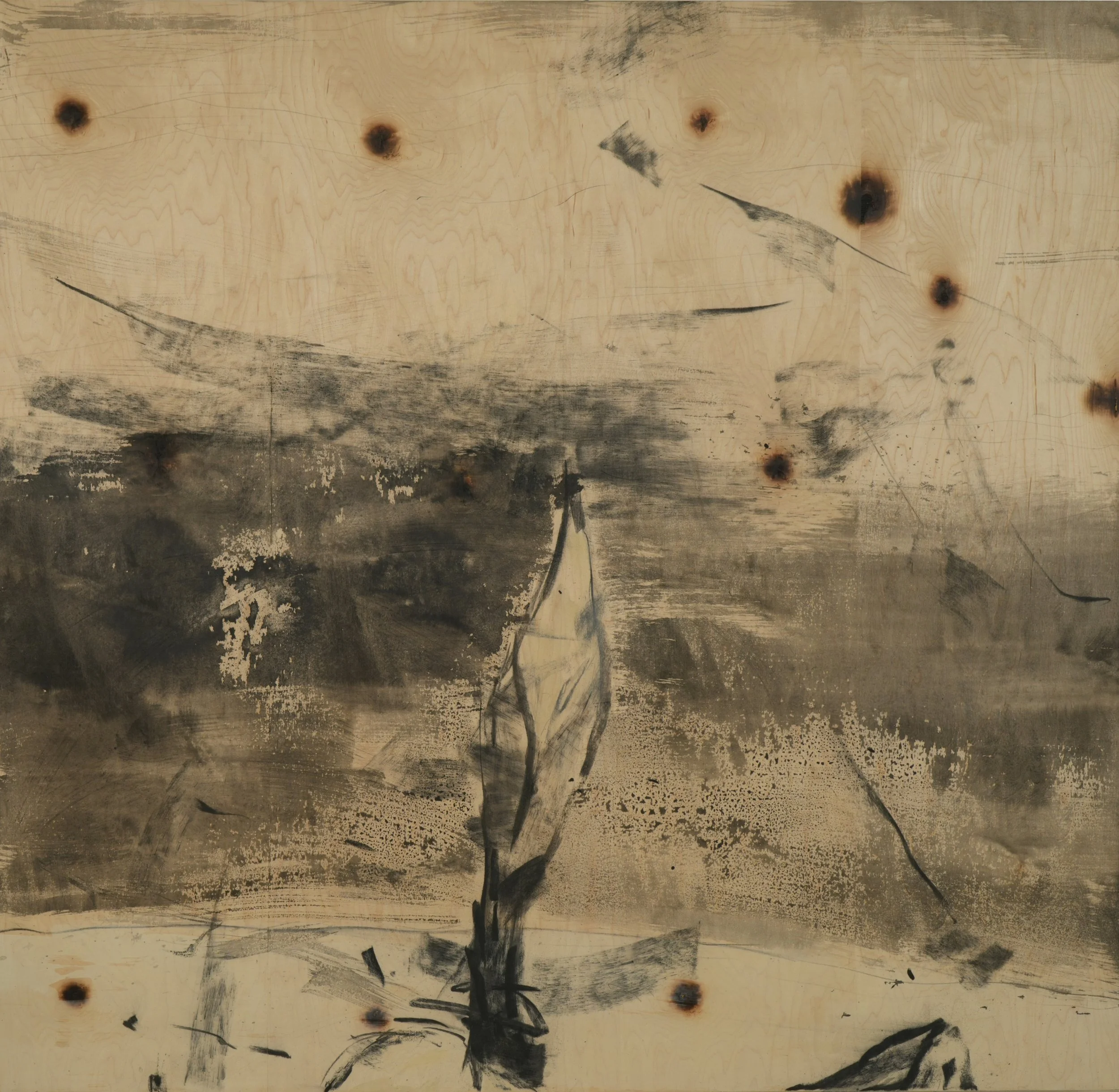
Detail: Dwelling in Fuchun Mountains (Rebuild)《富春山居圖再造》(2025) | Charcoal and ink on plywood | H 358cm x 734.5cm in 18 panels
Story behind the work
“When I was invited to exhibit in Taipei, besides telling my experience of leaving my hometown, I wondered: If I were to create a work for this city, what would it be? My mind went straight to 黃公望 Huang Gongwang’s 《富春山居圖》“Dwelling in Fuchun Mountains”, a 14th-century masterpiece split between two places—Mainland China and Taipei. Its divided journey struck me.
To my surprise, the original painting “Dwelling in Fuchun Mountains” was announced for exhibition at the Taipei National Palace Museum during my solo in Taipei. And life kept layering on coincidences. On the morning of October 26, I hopped into an Uber numbered 1997—the year that reshaped my hometown, Hong Kong—and headed to the National Palace Museum. Just before filming my visit to the museum, a bus rolled by with “FAA” on the body, the course code of my Fine Arts department back at the Chinese University of Hong Kong where I had my first formal Chinese Art Education.
Inside, not only was “Dwelling in Fuchun Mountains” on view, 盧鴻 Lu Hong’s《草堂十志圖》“Ten Views from a Thatched Hut” was also being displayed in the same room—the very print I once pinned in my Vancouver studio while imagining a life lived quietly, away from society, had I never moved to Canada.
When I returned to Vancouver, I discovered the other half of “Dwelling in Fuchun Mountains” was being exhibited in Zhejiang Provincial Museum.”
- Excerpted from Lam Tung Pang’s remarks upon the opening of Everyone’s journey toward faith is different, October 23, 2025
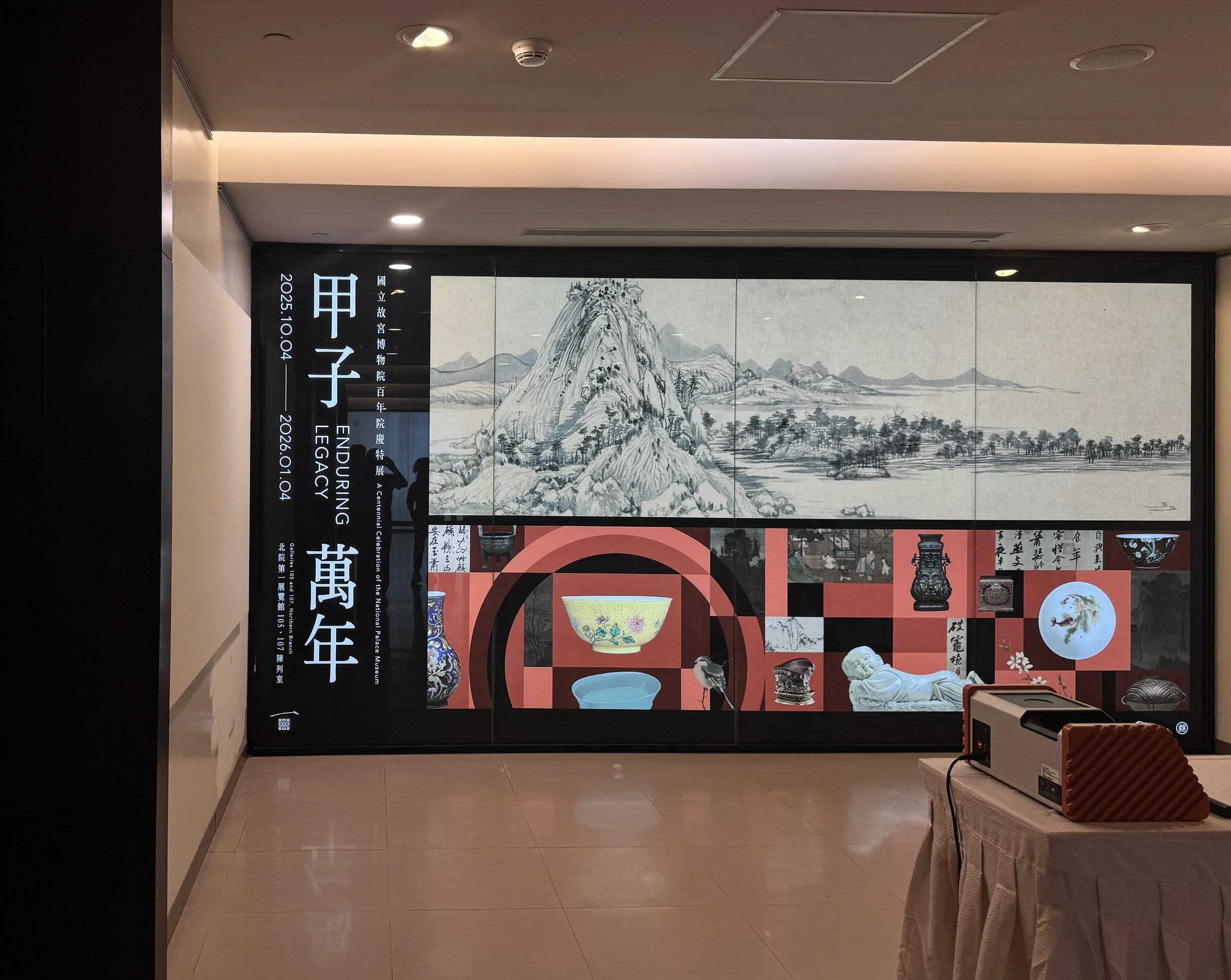
Visiting the National Palace Museum, Taipei, Taiwan
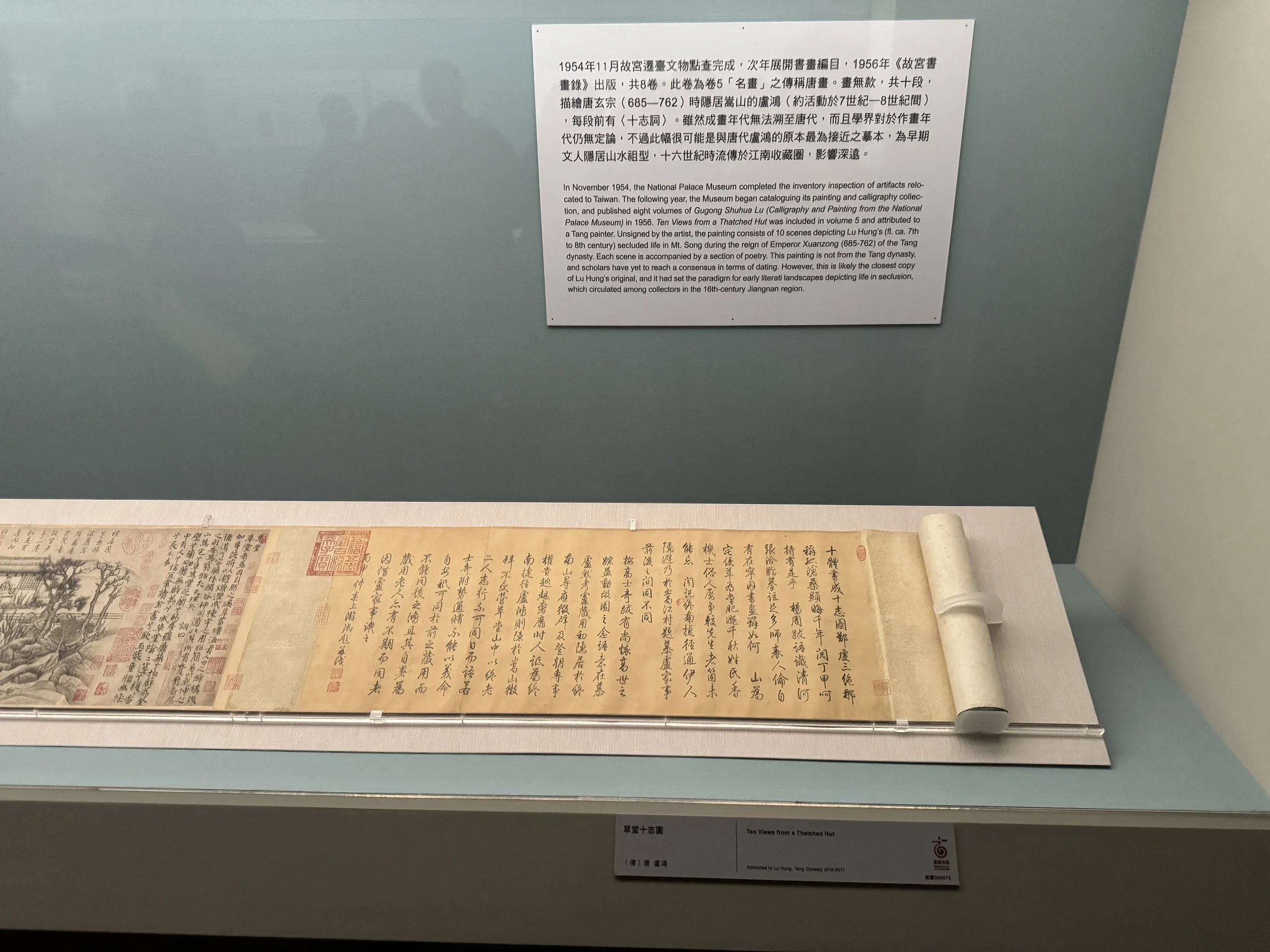
Lu Hong, “Ten Views from a Thatched Hut” (fl. Ca. 7th-8th c.), Tang Dynasty | Handscroll, ink on paper | 29.4 x 600cm | Exhibition view: Enduring Legacy: A Centennial Celebration of the National Palace Museum, National Palace Museum, Taiwan
Related project: Everyone’s journey toward faith is different
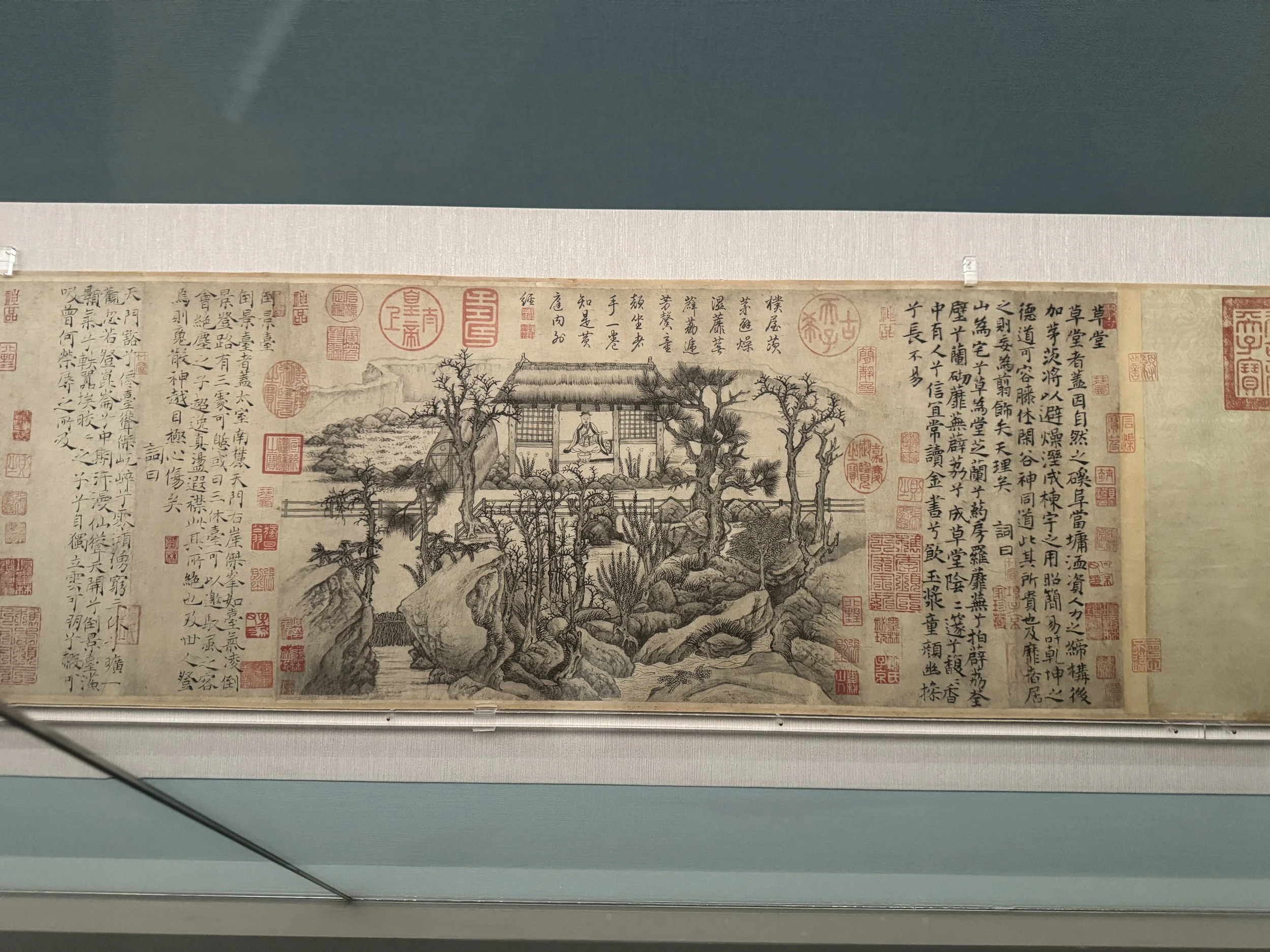
Lu Hong, “Ten Views from a Thatched Hut” (fl. Ca. 7th-8th c.), Tang Dynasty | Handscroll, ink on paper | 29.4 x 600cm | Exhibition view: Enduring Legacy: A Centennial Celebration of the National Palace Museum, National Palace Museum, Taiwan
Life + life, then we live in the life. It has a way of speaking back to us—again and again.“
- Lam Tung Pang